Chewie's Picks
Featured Posts
 ByChewie
Genius at 28. Hollywood's cautionary tale by 40. Back from the dead by 50. The M Night Shyamalan filmography is the strangest career in modern cinema — and one of the most interesting.
The M Night Shyamalan filmography doesn’t start with a twist. It starts with the birth of a wunderkind — the kind of cinematic arrival that feels less like a debut and more like something supernatural taking shape.
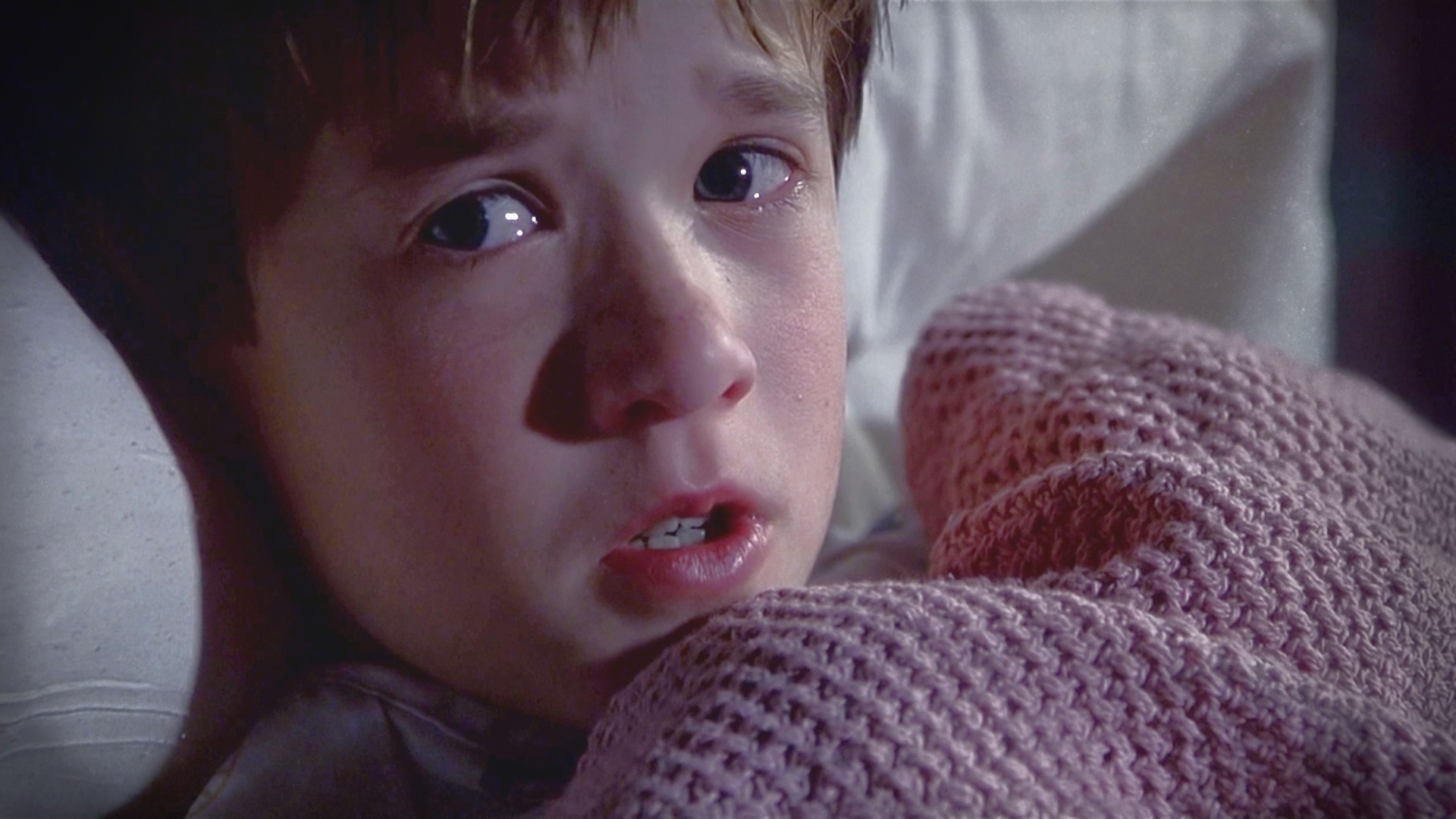
The Sixth Sense lands in 1999 and brings with it a curse that echoes for decades. A film about grief disguised as a ghost story, delivered with softness and then a clout. And at the centre of it all: a small boy whispering four words that became global folklore.
“I see dead people.” No CGI. No screams. Just bleak atmosphere thick as tar.
Toni Collette, barely 27, acting like her career depended on it — and famously having absolutely no idea she was in a horror film. She thought it was a beautiful spiritual drama right up until she wandered past the editing suite mid-shoot, saw the Mischa Barton scene being cut together, and went: “Oh holy sh**, I think this is a horror movie.” Haley Joel Osment staring down the lens like he’d survived four wars and three divorces. Bruce Willis being… well, Bruce Willis.
But beneath the shock and the praise and the memes, something darker begins to take root.
Shyamalan becomes a genius overnight — and unknowingly invites something in. A presence. A pressure. The kind of attention that feels flattering until you wake up with it sitting on your chest.
No one warns you that making a masterpiece at 28 is a curse. No one tells you the world will expect another one next year. And the year after. And the year after that. No one tells you the scariest monster in Hollywood isn’t failure — it’s success.
This wasn’t a debut. It was a trap. A director suddenly forced to make every future film in the shadow of a phenomenon. The Sixth Sense wasn’t the haunting. It was the first intrusion — the thing that slipped through the door and refused to leave.
The M Night Shyamalan filmography tracks like a haunting: the calm before, the moment something takes hold, the first shudder in the walls, the eventual infestation. And if you’re looking for the exact moment the presence slips through the doorframe, it’s his early genius — the kind of prodigious spark that looks like a gift until you realise what it feeds on.
Hollywood loves a phenom right up until it needs a new one. But Shyamalan wasn’t just good. He was branded. Crowned king of the twist before he even realised he was in the succession line.
From that moment on, every script arrived with a single demand: make the twist bigger.
That’s how a filmmaker becomes a myth — and how a myth becomes a monster. Not the kind he put on-screen, but the kind that lingers beside him in the editing bay. A shape just out of sight. A pressure at the base of the neck. A reminder that the audience wasn’t watching the film anymore. They were watching him — and waiting to be fed.
Once you’ve changed pop culture, you don’t get to simply make movies. You inherit an expectation — a hungry one. And nothing hungry stays satisfied for long.
The Sixth Sense didn’t haunt us. It haunted him.
Shyamalan’s early run feels almost unreal in hindsight — the kind of immaculate streak you only recognise later as the calm before something darker starts to move.
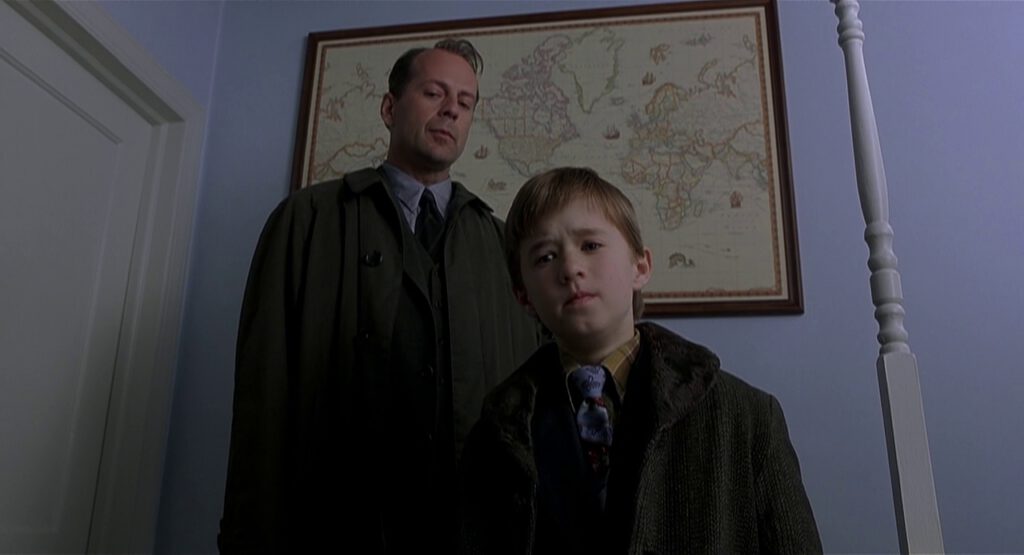
After The Sixth Sense, he moves straight into Unbreakable, a film audiences didn’t fully grasp at the time — mostly because it arrived a decade too early. A superhero story without the costume, a villain origin without the theatrics, a meditation on purpose disguised as genre. Marketed as a thriller, but really a slow, aching question: what if the extraordinary only feels extraordinary because everything else in your life hurts?
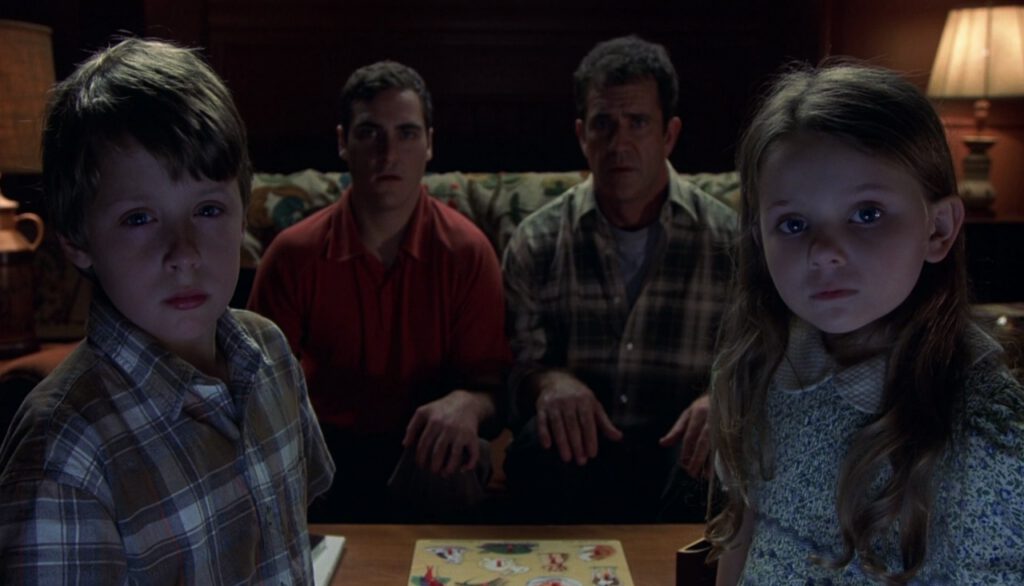
Then comes Signs, another story dressed up as something it isn’t. People remember the aliens. The aliens were never the point. They were barely even the subplot. Signs works beautifully if you watch it as a grief drama with occasional crop circles — a portrait of a man so gutted he can’t look at his own children without seeing the outline of everything he’s lost.
(And yes, Mel Gibson is technically in it. We acknowledge him the way you acknowledge a bigoted drunk uncle at Christmas: briefly, and only because he’s in the room.)
What ties these films together isn’t the twist — it’s the ache. Shyamalan builds worlds where the terror isn’t the monster; it’s the meaning beneath the monster. The ghosts are metaphors. The villains are mirrors. The fear is always human, always circling the bruise beneath the surface.
For a moment, the cult he never asked for is growing — whispering, gathering, reshaping itself into something expectant. Critics call him the next Spielberg. Studios circle like bright-eyed vultures. Audiences lean in, waiting.
It feels like a rise. But every rise carries the shape of a fall.
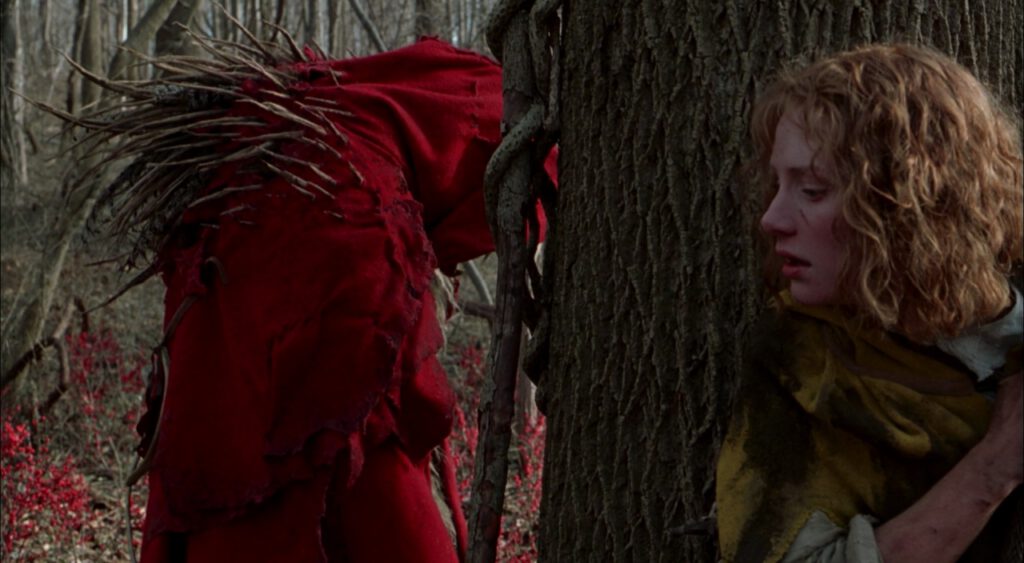
Every haunting has that moment when the house goes still. Not quiet — still. A charged silence before the walls start to breathe. For Shyamalan, that moment arrives with The Village.
It should have been the continuation of his golden streak: a folk tale wrapped in romance, a creature feature where the creature isn’t really the creature, a study of fear and control dressed in that warm autumn palette people now pretend they always loved. Instead the critics sharpened their teeth. The audience felt tricked. The cult that once worshipped the wunderkind suddenly decided it wanted blood.
What makes The Village so fascinating — and so unfairly maligned — is that it’s the closest Shyamalan ever came to saying the quiet part out loud: that most monsters are man-made, and the rest we invent to justify the walls we build. It’s beautiful. It’s eerie. It’s tender. And yes, the twist annoyed people, but so do taxes and they still matter.
Then comes Lady in the Water, which critics treated like a public meltdown. It isn’t — but it is Shyamalan at his most exposed. The fable, the mythology, the earnestness turned up to eleven. It’s the cinematic equivalent of handing someone your diary and hoping they won’t laugh. Hollywood laughed. Loudly.
By the time The Happening arrives, the cult has fully turned. The marketing promised apocalypse; the film delivered mood, absurdity, and Mark Wahlberg whispering to a plastic plant like he’d rehearsed with a chair. Most people hated it. You don’t have to love it — but you also don’t need to commit a hate crime against it.
Then the studio years hit: The Last Airbender and After Earth. Two films that feel less like Shyamalan and more like a man renting out his soul to pay the mortgage. After Earth tried so hard to distance itself from him you’d think he’d directed it from inside a witness protection programme — his name was practically scrubbed from the marketing. A quiet attempt at damage control that somehow made the whole thing feel even more cursed.
These are the films the internet pretends ended his career. They didn’t. What they ended was the illusion that Shyamalan could outrun the presence that had been trailing him since 1999. For almost a decade he became Hollywood’s favourite cautionary tale. A ghost haunting other people’s blockbusters.
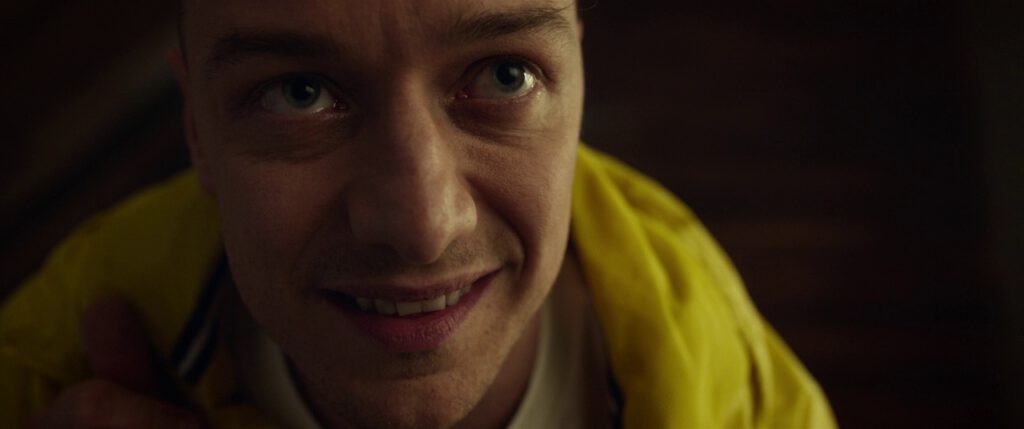
Every haunting eventually reaches the point where the house has been stripped bare, the lights are out, and the protagonist is left wandering through their own ruins. That’s Shyamalan by the early 2010s — a once-anointed wunderkind reduced to a ghost story told at industry dinners.
And then, quietly, he reappears.
Not with a studio tentpole or a prestige comeback — but with The Visit, a found-footage oddity made on a shoestring and powered almost entirely by discomfort. It’s scrappy, feral, and deeply weird — the cinematic equivalent of someone trying to claw their way out of a coffin with their bare hands. The film shouldn’t work. And yet it does — because for the first time in years, Shyamalan feels present again. Not polished. Not perfect. Just alive and strangely dangerous.
Then comes Split — the film that reminds everyone what he’s capable of when the noise fades. James McAvoy devours the role with such chaotic commitment it borders on performance art. Anya Taylor-Joy grounds the whole thing with those haunted, steady eyes she seems to have been born with. It’s tense, atmospheric, tragic — pure Shyamalan, but sharpened to a point.
And then the twist — except it isn’t the twist. It’s the reveal: that this strange, intimate thriller has been secretly tethered to Unbreakable all along. A film audiences had slowly, quietly decided was a misunderstood masterpiece. Nobody saw the connection coming. And when it lands, it lands like a door swinging open in a room you’d forgotten existed. It isn’t nostalgia. It’s reclamation — a reminder that even after a decade in the wilderness, he still knows exactly where his ghosts live.
Suddenly the critics soften. The cult stirs. The industry cranes its neck. Shyamalan hasn’t returned to his former glory — he’s simply stopped apologising for who he is. It isn’t a triumphant comeback. It’s a pulse. A jolt. A sign that the man the industry tried to bury has started knocking from the inside.
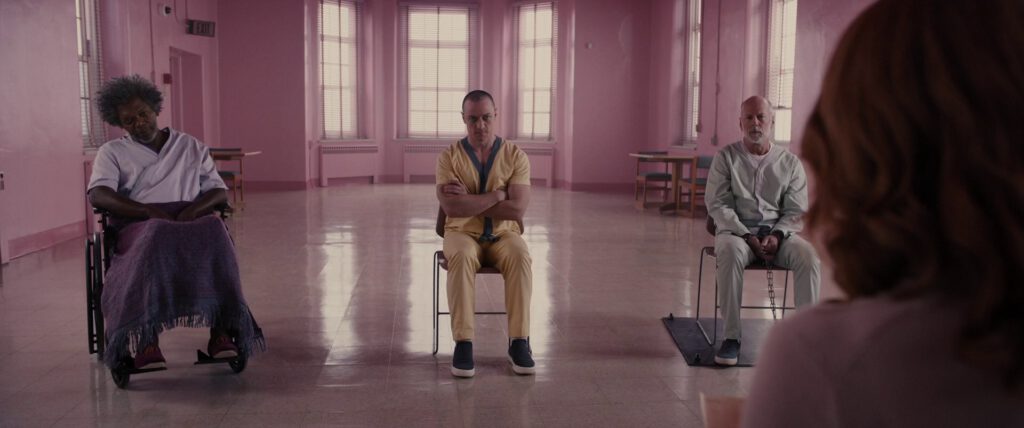
Every haunting eventually reaches the confrontation — the moment the thing in the walls steps forward and asks what, exactly, you think you’re running from. For Shyamalan, that moment is Glass.
On paper it should have been a victory lap: a long-promised finale, a cult payoff, a gift to the believers who’d been whispering “Unbreakable was ahead of its time” for two decades. Instead, Glass plays like a séance where the wrong spirit answers. The scale is ambitious, the tone strange, the ending divisive enough to split dinner tables. Critics call it messy. Fans call it misunderstood. What it really feels like is a filmmaker wrestling with the mythology he built — and losing on points.
Then comes Old — a film that looks like a thriller but moves like a panic attack. High concept, low mercy. A beach that ages you into oblivion while your regrets accelerate faster than your heartbeat. It’s uneven, eerie, occasionally funny in that specifically Shyamalan way where you’re not sure if he’s in on the joke. But underneath the eccentric delivery is something real: a story about the terror of time, decay, and the bodies we’re trapped inside.
The twist is no longer the centrepiece. It’s garnish — a quiet nod instead of a standing ovation. This era isn’t about spectacle. It’s about exhaustion. Characters fraying at the edges. Families splintering. People bargaining with inevitability.
Shyamalan stops trying to escape the ghost he summoned in 1999 and starts interrogating it instead. It’s not a comeback. It’s not a collapse. It’s the sound of a filmmaker finally admitting the haunting is real — and choosing to work with it rather than fight it.
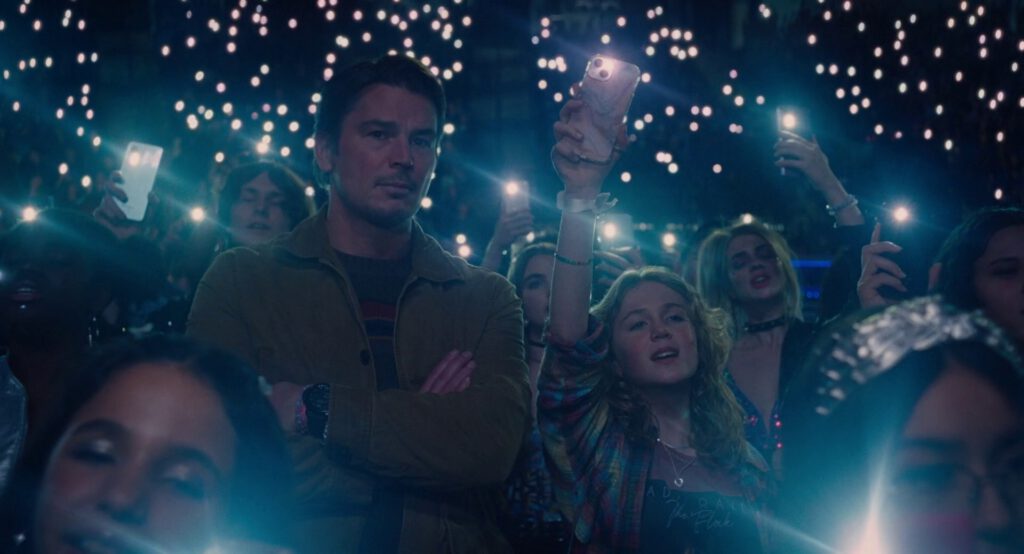
After the chaos of the past two decades, Shyamalan enters a new phase — not a comeback, not a reinvention, but something quieter: control.
Knock at the Cabin is the first sign of it. A tight, unsettling chamber piece — and somehow the most Shyamalan film he’s made in years despite being adapted from a novel he didn’t write. Contained, deliberate, almost surgical. No sprawling mythology, no spectacle for its own sake. Just moral dread simmering under the floorboards and Dave Bautista giving a performance so gentle it feels like a threat. For the first time in decades, Shyamalan stops fighting his instincts and starts refining them.
Then comes Trap — a thriller that leans into his love of odd structure and big risk. Playful, confident, and deeply strange in a way that feels intentional rather than accidental. This is a filmmaker who has survived the cult worship, the backlash, the exile, the resurrection. A man who now understands the monster in the room because he built it — and knows how to feed it without letting it eat him whole.
This era isn’t about proving anything. It’s about ownership. Shyamalan, at last, directing like the house is finally his again.
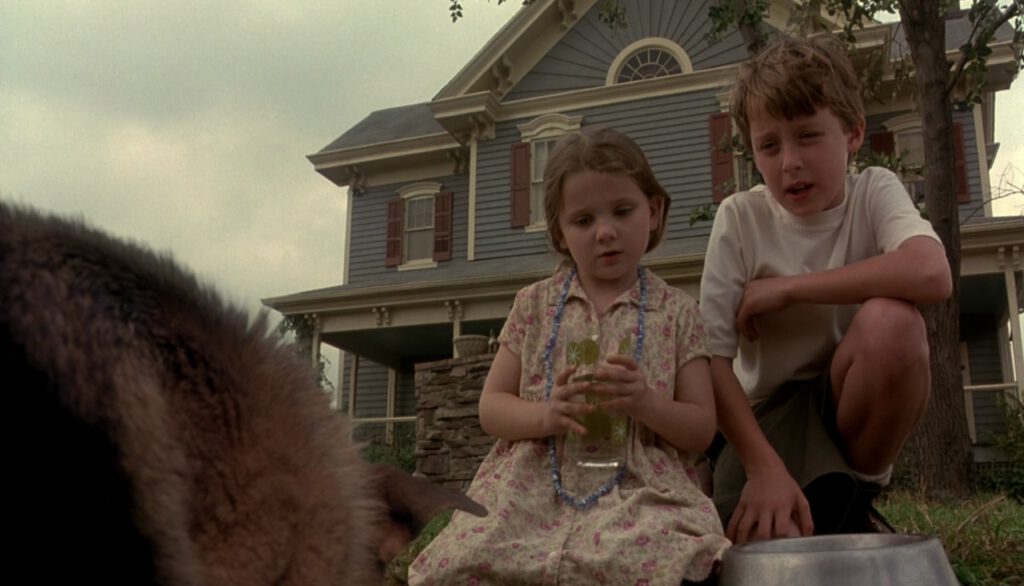
Every filmmaker has tells. Shyamalan has obsessions. His characters don’t start with hope — they start with grief, doubt, and the cynical exhaustion of people who’ve already surrendered something important. Faith returns in fragments, usually after something breaks. The family is always one fracture away from disintegration, with the supernatural as background noise and the real terror behind closed doors. His horror lives in domestic spaces that should feel safe — a kitchen table, a basement, a field, a beach — because the uncanny slips in through the same door you use for groceries. And somewhere beneath the dread, always, a soft heart. He’s earnest in a way that makes people uncomfortable, but it’s the sincerity that makes even his strangest films feel strangely human. The twist was never the point. It’s the door closing behind you. The real story is the atmosphere you walked through to get there.
These aren’t trademarks. They’re rituals. It’s why his films feel connected even when everything else — budget, genre, tone — changes. He’s not repeating himself. He’s circling something. A wound. A fear. A question he still hasn’t answered.
And maybe never will.
“I see dead people.”
Four words that became a global catchphrase, a meme before memes existed, the line whispered in school corridors like a secret initiation ritual. Entire generations grew up quoting a traumatised child as if it were small talk.
Then there’s the twist — not his invention, but definitely his curse. For years, any film with a surprise ending was compared to him, fairly or not. The association stuck long after he tried to shake it off. Eventually he stopped shaking and started shrinking the reveals deliberately — treating the twist like punctuation rather than purpose, a comma rather than a full stop.
He also laid the groundwork for what later got packaged and sold as “elevated horror”: haunted families, domestic dread, grief as the real monster. Shyamalan did it first, without the A24 mood lighting or designer trauma arcs — just sincerity, atmosphere, and a stubborn belief that horror should feel personal.
He’s the internet’s favourite punching bag and favourite comeback story, depending on the month. Whether people still watch his films or just remember the cultural echo, one thing is certain: Shyamalan lives rent-free in the cultural crawlspace.
Shyamalan’s career isn’t a rise, a fall, or a comeback — it’s a haunting. A 25-year encounter between a filmmaker and the monster he accidentally summoned at 28.
He made a masterpiece too early.
He was praised into a corner.
He was punished for trying.
He was mocked for failing.
He crawled out anyway.
Few directors survive that kind of mythology. Even fewer stay interesting afterward. But Shyamalan never stopped being sincere, or strange, or defiantly hopeful in ways that shouldn’t work but often do. His films aren’t tidy. They’re alive — jittery, emotional, bruised, full of sentimentality he refuses to apologise for.
You don’t have to love all his work. You don’t even have to like most of it. But if you care about horror, about atmosphere, about the uneasy place where grief and wonder overlap — you can’t pretend he didn’t leave a mark.
Shyamalan didn’t escape the ghost. He learned to live with it — which, if we’re honest, is the most human ending of all.
He wasn’t haunted by the twist. We were.
Chewie’s Take
The M Night Shyamalan filmography is one of the most fascinating and maddening careers in modern cinema — and I say that as someone who has sat through The Happening twice. (Once by choice. Once by accident. Both traumatic.) The man built a genre, got eaten by it, clawed his way back out, and is now making some of the most interesting studio films around. Knock at the Cabin and Trap are genuinely good. Unbreakable is a quiet masterpiece. Signs will make you cry if you’re in the right mood and you know it. The middle years are rough but they’re instructive — you can watch a filmmaker losing himself in real time and then finding his way back. That’s worth something. Not everything, but something.
The internet has been wrong about him twice: first when it crowned him infallible, then when it declared him finished. He’s neither. He’s just a very strange man making very strange films on his own terms. Respect it.
Watch Rating
Cancel Everything — but only for The Sixth Sense, Unbreakable, and Signs. The rest: pick your moment.
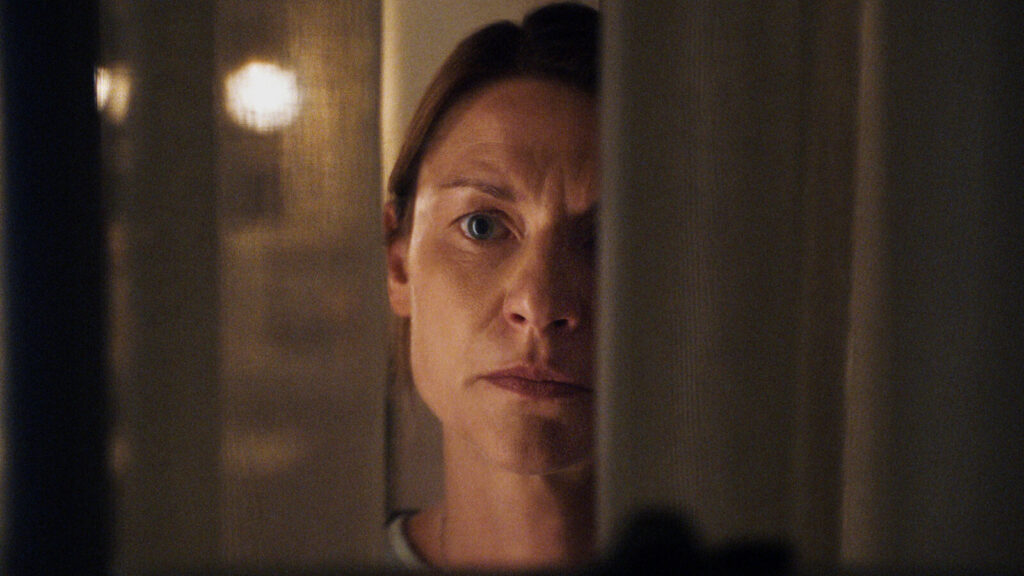
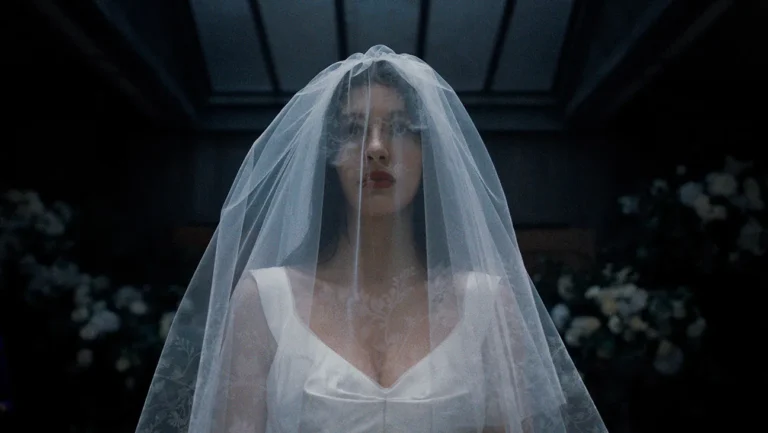
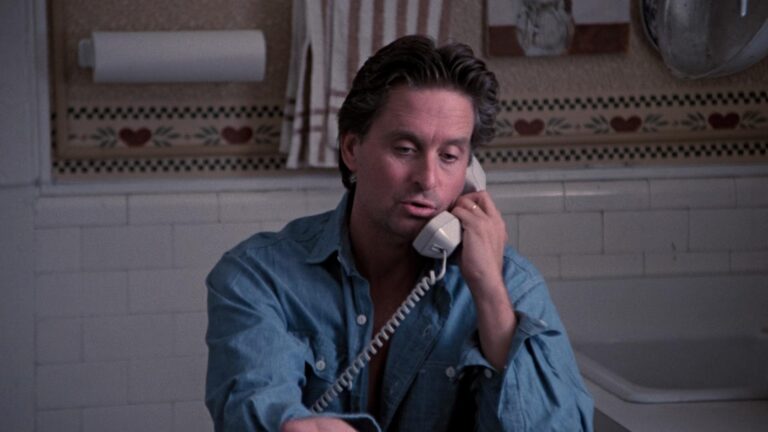
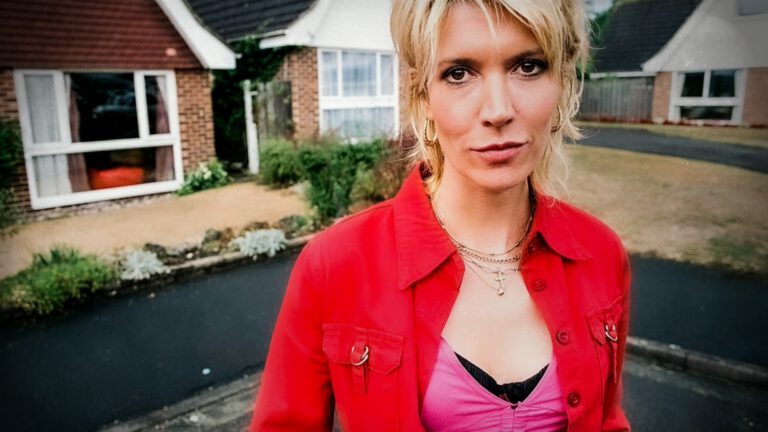
Image credits: Film stills from The Sixth Sense (1999), Signs (2002), The Village (2004), Split (2016), Glass (2019), Old (2021), Knock at the Cabin (2023), and Trap (2024). Sourced from FilmGrab and used for editorial and commentary purposes.