ByChewie
The Scariest Scenes in Modern Horror
The scariest horror movie scenes don’t announce themselves. They just close the door and wait.
The scariest scenes aren’t loud or gory. They’re not the ones that fling a corpse at the camera just for shock. The moments that linger — the ones that haunt your thoughts hours later — work because your body jolts before your mind catches up. Your pulse surges. Your breath falters. You freeze, as if the thing onscreen will notice if you move. It’s senseless, irrational, and completely beyond your control.
A truly terrifying scene breaks a rule you didn’t know you depended on. Light should make you safe. People should act like people. Doors should not — ever — open themselves. Basements should just be basements, not gates to hell. When a film quietly removes one of those assumptions, everything tilts. Suddenly you’re trapped in a moment where anything could happen — and probably will. That’s the good stuff. The why am I doing this to myself feeling.
Great horror doesn’t need monsters. It lives in waiting. The breath before the scream. The silence held a beat too long. The hallway that extends just a fraction further than it should. These are the scenes that follow you home, uninvited, and make themselves comfortable.
And when the moment finally ends, you don’t really feel relief. Good horror leaves a mark — dormant until something mundane triggers it. A sound. A shadow. A creak in your house that definitely wasn’t there before.
Speaking of which: let’s start with the scene that ruined subterranean storage for an entire generation.
Zodiac: The Basement Scene
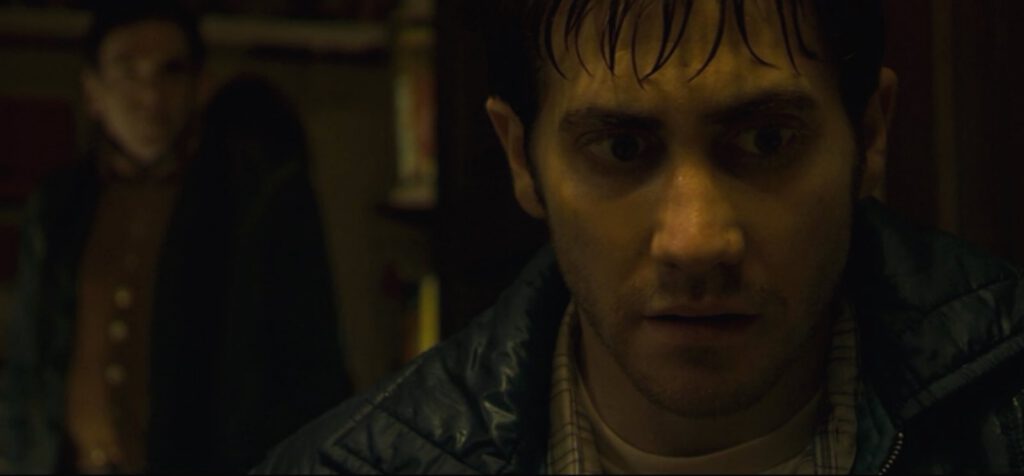
The basement scene in Zodiac terrifies without raising its voice. It doesn’t need to. It simply closes the door behind you and waits.
A cartoonist-turned-amateur-investigator follows a lead to a stranger’s home — a soft-spoken man who’s nervous in all the wrong ways. Rain outside. A quiet house. Too quiet. They go downstairs so this stranger can “check something.” And suddenly you’re in a dim basement with a man who may or may not be a serial killer.
No music cue. No monster. No theatrics. Just two men in a space that feels wrong in a way your body clocks before your brain does. Every sound is amplified: a creak above, footsteps that may or may not belong to someone else, the slow realisation — shared by character and viewer — that there might be another person in the house.
The genius is that it refuses to let you off the hook. It doesn’t confirm the danger. It just leaves you standing there, trapped in the tension of what might be. And that — the unresolved possibility — is scarier than anything it could show you.
Zodiac didn’t invent basement horror. It just perfected it.
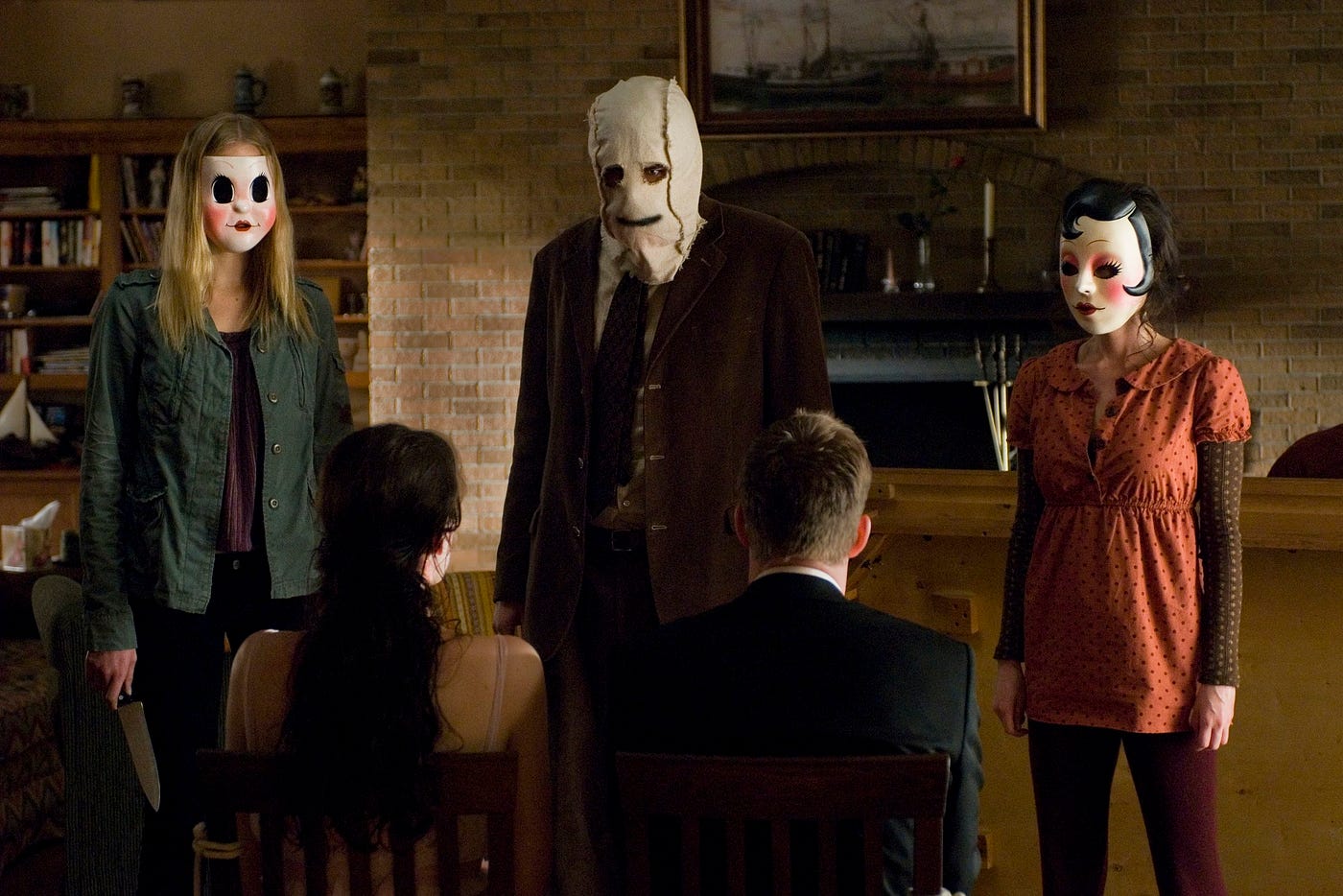
The Strangers: “Because You Were Home.”
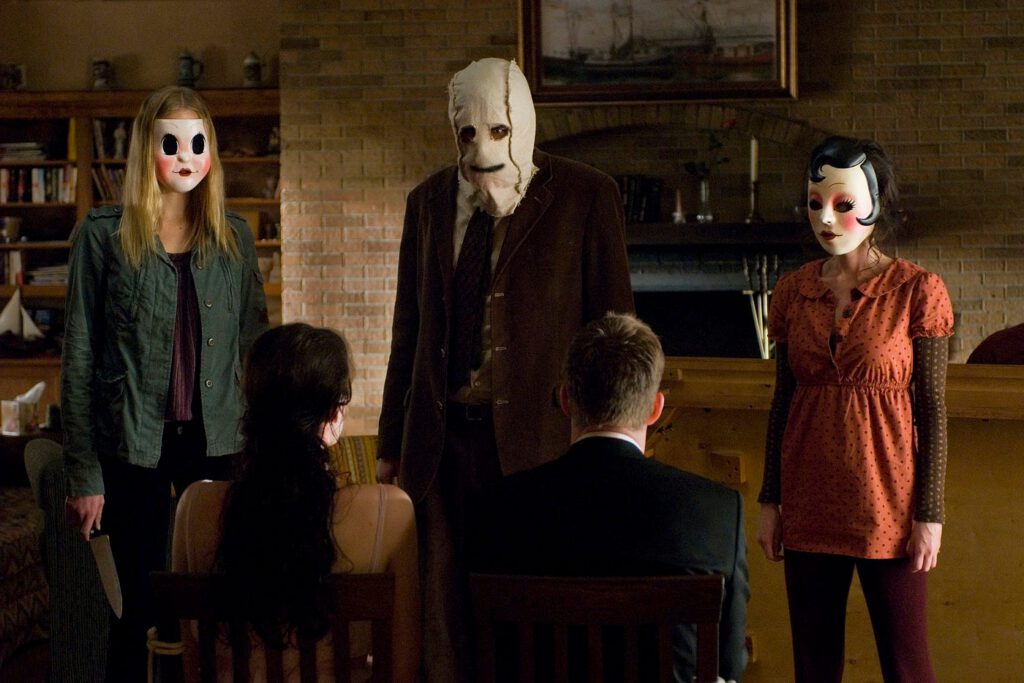
If Zodiac is the fear of what might be waiting in the dark, The Strangers is the fear of what’s already inside the house.
The moment everyone remembers happens early and quietly. Liv Tyler stands in her kitchen — weeping, drained, emotionally raw — completely unaware of the masked woman standing in the shadowy hallway behind her. No noise. No reveal. No jump scare. Just a shape where a shape shouldn’t be.
It’s terrifying because it breaks one of the last sacred rules of safety: you should know when you’re not alone. You don’t. Not here.
Nothing happens in that moment — and that’s precisely why it works. The intruder doesn’t move. She simply exists: danger in a mask of glitter and glue. It’s psychological violence so tranquil it feels obscene.
When Liv Tyler finally asks why they’re doing this, the answer lands like an insult: “Because you were home.” No motive. No revenge. No cosmic curse. Just availability. The horror isn’t rage or evil — it’s indifference. You were convenient. Today, unfortunately, he chose you.
If Zodiac ruined basements, The Strangers ruined the concept of a quiet night in.
Hereditary: The Decapitation Aftermath
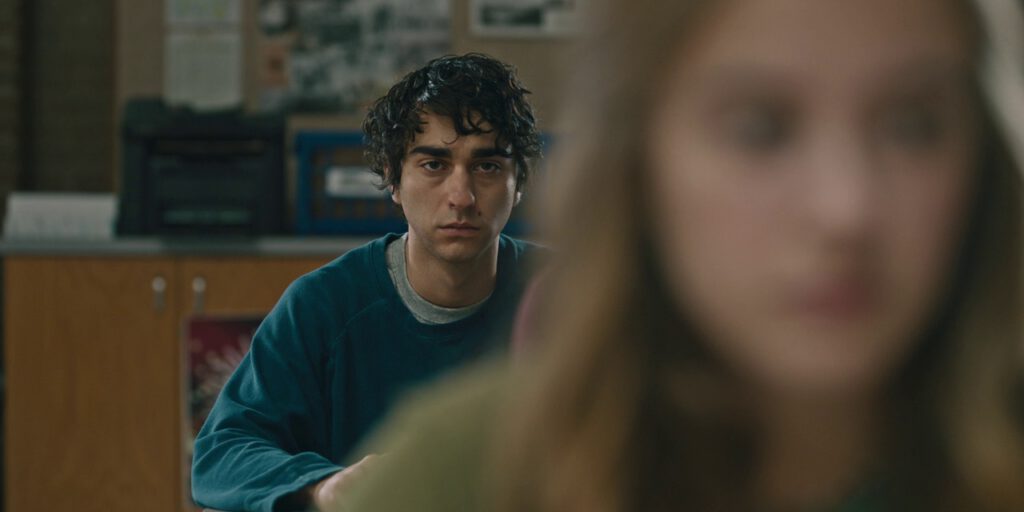
Some horror scenes scare you. Hereditary has a scene that feels like it changes your blood temperature.
The decapitation itself is brutal, unexpected, and deeply traumatic. But the truly horrifying part comes after — and it’s almost completely silent.
Peter sits in the car, frozen. Not breathing, not moving, not blinking. A boy who’s crossed an invisible line and has absolutely no way back. The camera doesn’t shake or zoom or offer any comfort. It just sits with him. With you. In that unbearable gap where grief hasn’t landed yet because the mind hasn’t caught up to the body count.
He drives home. Lies in bed. Eyes wide open, bracing for the world to end. Morning comes anyway.
The scream that shatters the silence is among the most harrowing sounds in film. It’s not a horror-movie shout — it’s a mother hitting the unthinkable at full speed. The camera stays still. You don’t see the body. Just Toni Collette’s wail moving through the house like something alive.
Ari Aster doesn’t show you the violence. He makes you feel it — which is so much worse. For the rest of the film, that scream is still there. Even when the demons arrive. Even when the cult reveals itself like a horrific surprise party. The real horror of Hereditary isn’t King Paimon. It’s this — the moment a family breaks quietly and permanently.
Mulholland Drive: Winkie’s Diner
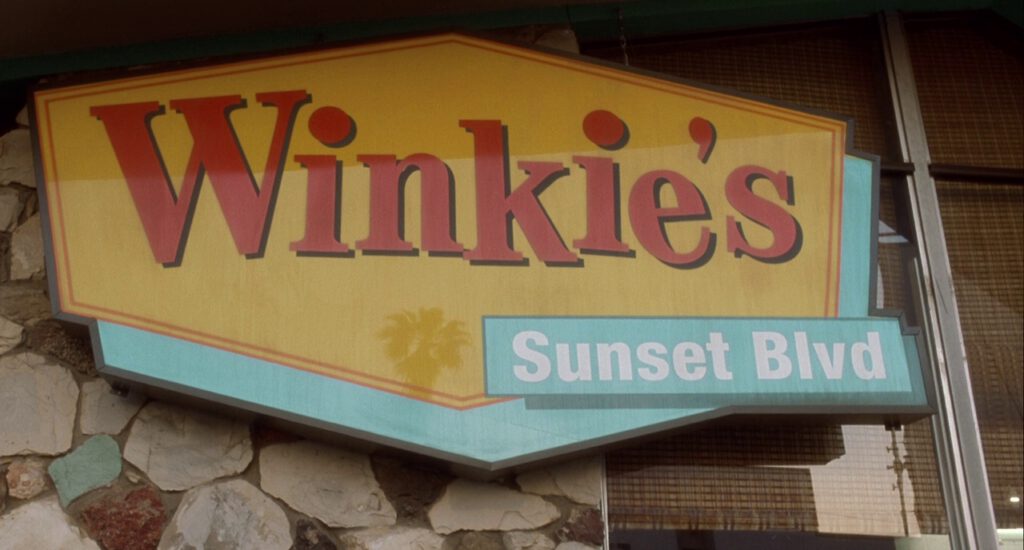
Some scenes are scary because something happens. This one is scary because it might happen — and your body reacts as if it already did.
Two men sit in a greasy diner. One is terrified, convinced he’s about to relive a nightmare he can’t shake — a dream about a monster behind the building, something watching, waiting. The other humours him politely, the way you humour a friend who’s had one existential crisis too many before breakfast.
They go outside. Just a normal walk toward a normal wall in normal daylight. Which makes it worse. Every step tightens something. The camera moves like it’s trying not to wake something up.
When the figure finally slides into view — hollow-eyed, filthy, wrong — it’s not the reveal that gets you. It’s the confirmation. The awful, stomach-dropping realisation that the dread was justified. That it’s been there the whole time.
No jump scare. No loud noise. Just paranoia in slow motion, and a figure that looks less like a monster and more like a fear you’ve always had but never been able to name. David Lynch takes the simplest possible setup and turns it into a moment people are still talking about twenty-five years later.
It’s not really about the monster behind the diner. It’s about the silence before you see it. And the certainty that it’s not going anywhere.
The Shining: The Hallways That Shouldn’t Exist
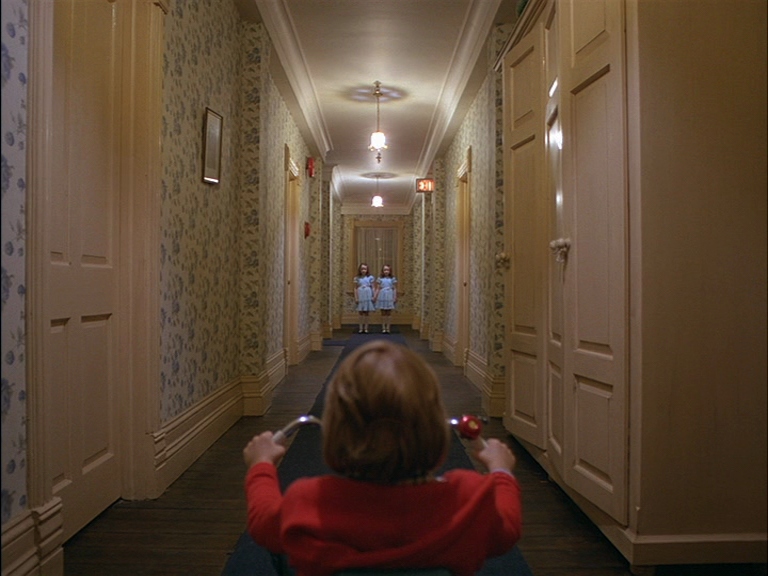
People talk about the twins, because of course they do. But the real terror in The Shining isn’t the girls. It’s the hallways.
Danny pedals through a maze of carpet and hardwood, his small plastic wheels rattling like a countdown. Every turn feels off — not dangerous, not supernatural, just wrong in the quiet way that tells you you’re somewhere you shouldn’t be. The Overlook doesn’t chase him. It waits. Like a snake getting comfortable.
The space is claustrophobic despite being enormous. Each hallway seems narrower than the last. The lighting is bright enough to seem safe — but safety doesn’t exist here. The cleanliness makes it worse, somehow. Horror shouldn’t belong in a place this pristine. That’s exactly why it fits.
Then the twins appear — not jumping, not screaming, not doing anything so obligingly scary. They just stand there. Still. Silent. Not acting like children, because they aren’t children anymore. They’re more like a memory with an agenda.
Kubrick doesn’t scare you with ghosts. He scares you with the building. The Overlook watches from every doorway and whispers from every straight corridor. Every corner is a question you don’t want answered.
The twins are the punchline. The hallways are the joke. The joke is on you for thinking bright lights meant safe.
The Overlook isn’t haunted. It’s hungry.
The Orphanage: The Knocking Game
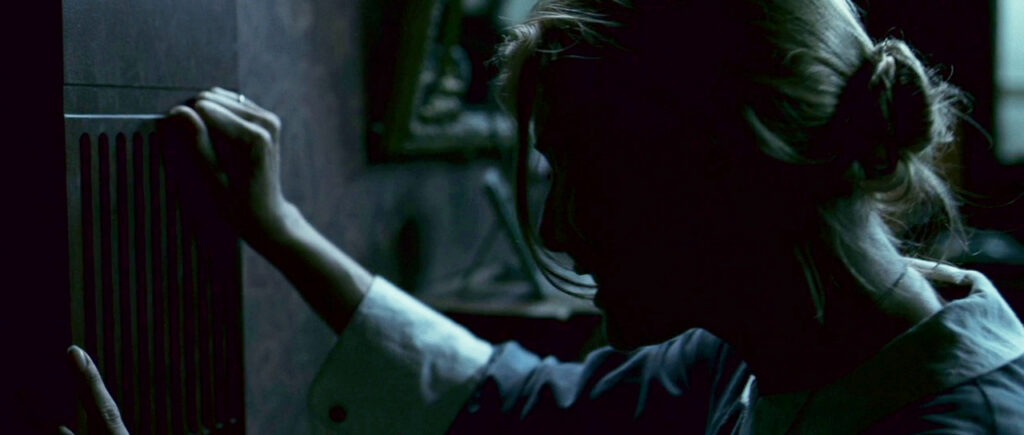
Some horror films scare you. The Orphanage hurts you before it scares you.
Laura is alone in the house, falling apart. She decides to play a game from her childhood — a simple knocking pattern, just nostalgia, nothing dangerous about it.
Except it isn’t nostalgic anymore. She knocks once. Turns her back. Waits. Nothing. She knocks again. The silence thickens. Then: knock. Soft. Close. Too close.
She knocks again. The response comes faster — multiple knocks this time, louder, matching her rhythm with unsettling enthusiasm. She keeps turning, expecting to see a child, a shadow, a prank. There’s nothing. Just a corridor that suddenly doesn’t feel empty.
Then the door slams shut.
It’s not a jump scare. It’s a confirmation — the moment you understand you’re not dealing with grief or imagination. You’re dealing with a house that remembers things you’re trying to forget. This isn’t just a haunting. It’s a negotiation.
What makes it devastating is the emotional core: Laura’s desperation to find her son has worn down every defence she has. She’s willing to let anything in if it means getting him back. And the house responds. Children’s games shouldn’t feel dangerous. Memory shouldn’t feel weaponised. Grief shouldn’t feel like an open door.
In this house, everything does.
It Follows: The Tall Man
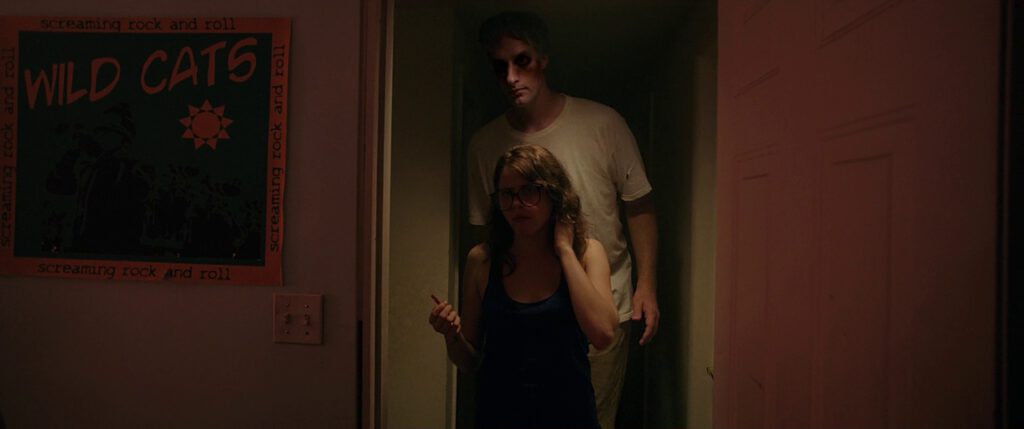
Most horror films chase you. It Follows does something worse: it walks.
Jay sits in her friend’s kitchen — terrified, fragile, surrounded by people who want to help but can’t. The camera holds long enough for you to exhale. You think the danger has paused. You think you have a moment.
You don’t.
A tall man — so tall he seems structurally wrong — appears in the dark hallway and walks straight toward her. No music cue. No cutaway. No mercy. Just a figure moving with total, unhurried purpose. He isn’t running. He doesn’t need to.
Every step is steady, quiet, disturbingly calm — like a nightmare that’s been doing this for years and has absolutely nowhere else to be. The fear doesn’t come from speed. It comes from inevitability. It will reach you. It’s just a matter of when.
The rules of the curse are simple, brutal, and psychologically perfect: it’s always coming, it can look like anyone, it never stops, and you will eventually be tired. It will not.
The camera doesn’t spare you. It doesn’t cut away. It just lets him walk. And walk. And walk. And then you realise — this is the whole film, compressed into one hallway. You can’t outrun time. You can’t outrun guilt. You can’t outrun something that has nothing else on its calendar except you.
It’s not coming fast. It’s just coming.
Lake Mungo: The Hallway Reveal
Some horror films scream. Lake Mungo whispers — and somehow that’s so much worse.
The whole film is a slow documentary-style unravelling of a family grieving their daughter, Alice. Sad. Eerie. Atmospheric. Manageable, you think. You’ve got this.
Then the hallway scene happens. And your nervous system files a formal complaint.
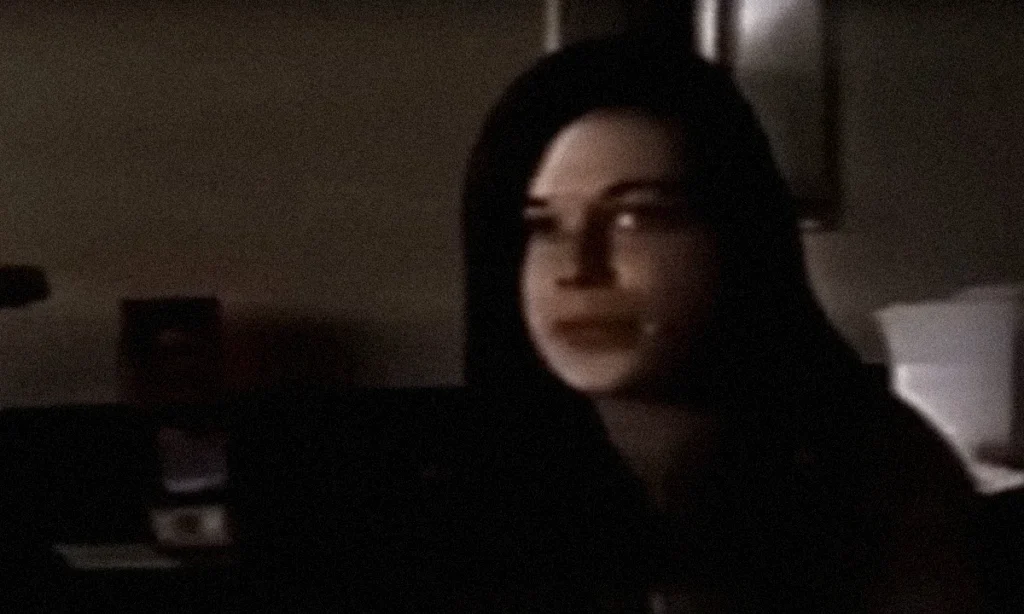
It comes near the end, long after you’ve convinced yourself this isn’t that kind of horror film. Grainy footage. No music. No dramatic buildup. Just the quiet hum of a recording and the faint static of something bad about to happen.
A shape. A figure. Standing in the hallway. Not jumping. Not lunging. Just there — still, silent, patient. Like it’s been waiting for you to notice.
And when the camera pushes in: it’s Alice. Waterlogged, pale, wrong. The drowned reflection of the girl they’ve been mourning. The reveal lands like a secret slipping into the room uninvited.
The horror isn’t the ghost. It’s the implication: the dead don’t just linger — they come back changed. Whatever happened to Alice didn’t end in the water. It followed her home.
This scene ruins people because it reframes everything. Every moment you dismissed becomes a warning. It burrows in quietly, then detonates hours later as a full-body shiver. Lake Mungo doesn’t care about scaring you in the moment. It cares about haunting you for weeks.
This hallway is exactly why it succeeds.
The Haunting of Hill House: The Bent-Neck Lady
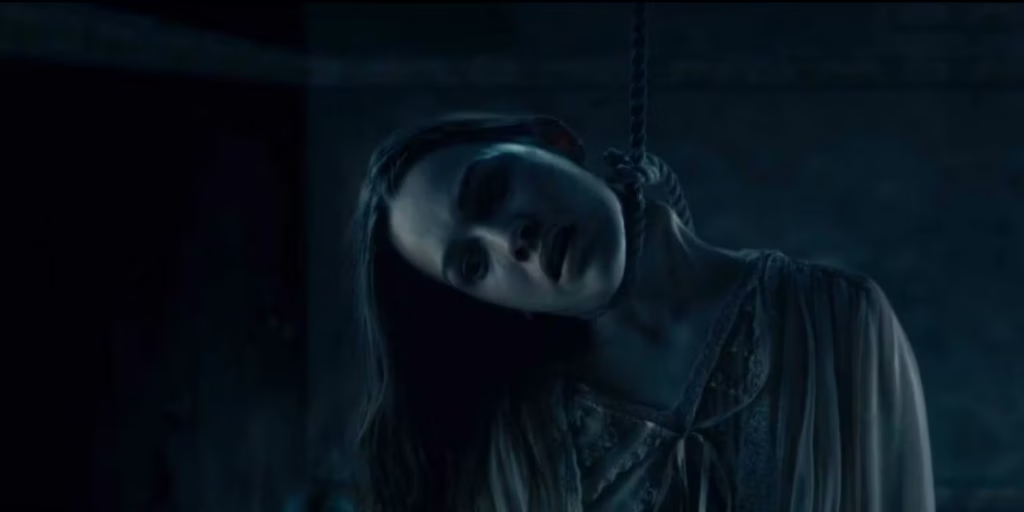
Most horror gives you a ghost to fear. Hill House gives you a ghost — and then tells you, with exquisite cruelty, that it was you all along.
The Bent-Neck Lady haunts Nell as a child, torments her as an adult, stalks her through every failed attempt at a normal life. She’s the thing that shows up at 3AM whether you want it or not. Then the reveal drops — not with a jump, not with a scream, but with a sickening, elegant sense of inevitability.
Nell is the Bent-Neck Lady. She always was. She always will be.
When Nell dies in the house, her spirit is sent back through the moments of her own life. She becomes the thing that scared her as a child. She becomes her own warning. It’s a tragic time loop — poetic, brutal, and impossible to stop once you’ve understood it.
The terror isn’t supernatural. It’s existential. The idea that your suffering is circular. That your worst fear isn’t chasing you — it’s waiting for you at the end.
Hill House doesn’t weaponise ghosts. It weaponises sympathy. You don’t fear the Bent-Neck Lady anymore — you mourn her. And that’s when the horror hits hardest.
Very few horror scenes manage to be terrifying and heartbreaking simultaneously. This one does both, and it doesn’t even break a sweat.
The Invitation: Red Lantern Ending
Some horror films go out with a scream. The Invitation ends with a signal — quiet, distant, and genuinely horrifying once you realise what it means.
For most of the film you’re stuck in a slow-burning pressure cooker: a dinner party, a grieving father trying to stay polite, a host who’s a little too serene, and a vibe so off you could bottle it as a migraine. The dread coils and rearranges itself every time someone smiles a second too long.
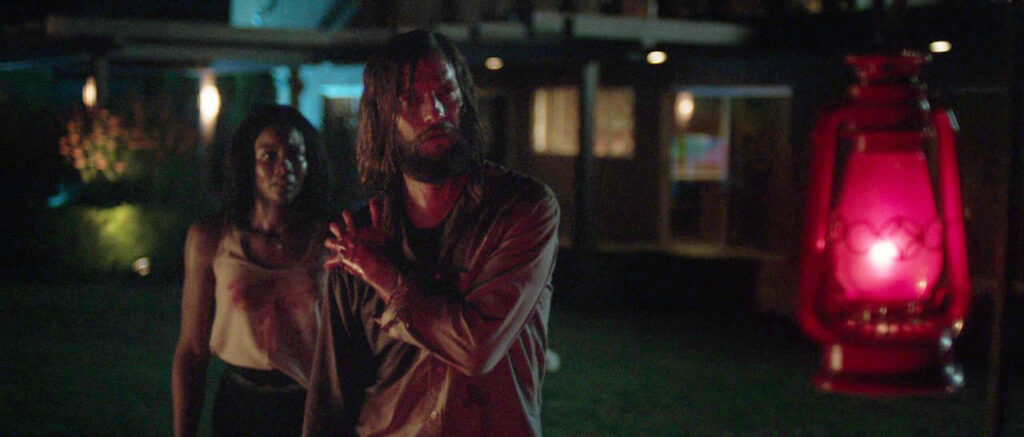
After everything goes wrong (and Christ, does it go wrong), Will and Kira finally escape. Bloodied, shaking, traumatised. They stumble into the backyard, desperate for air and silence and any proof that the nightmare is over.
And that’s when they see it.
Across the hills of Los Angeles, red lanterns begin to glow. One by one. Dozens. Hundreds. Tiny pinpricks of coordinated dread spreading across the dark city.
It wasn’t just this dinner party. They weren’t the unlucky ones. The entire city is participating.
It’s not a twist. It’s a revelation — the moment intimate horror widens into societal horror, and you understand in a single breath how fragile civilisation actually is, and how quickly people will join something dangerous if it promises relief from pain.
The film doesn’t explain it. It doesn’t comfort you. It just leaves you watching red lights appear across the hills like the start of the world’s quietest disaster.
Your stomach drops after the cut to black. Not before. That’s the move.
Chewie’s Take
Every scene on this list works because it removes something you were relying on. A basement that should be safe. A kitchen where you should be alone. A hallway that should just be a hallway. Horror finds the gap between what should be true and what is — and it lives there.
The best ones don’t resolve. They don’t give you the release valve of a neat ending or a villain you can point at. They just leave the door slightly open and let your brain do the rest. That’s the contract. You watched it, now you own it.
A hallway. A basement. A children’s game. A dinner party. One bad moment is all it takes — and the worst part is you already knew that before you pressed play.
Images used for editorial and commentary purposes.
Chewie
Still scrolling? Then you're one of us.
Fortnightly recommendations for people whose "comfort watch" is a serial killer documentary. No spam, no filler, no cheerful nonsense.