ByChewie
Don’t Summon These: The Most Terrifying Demons in Mythology
Some of them want your soul. Some of them want your marriage. One of them will kill you AND the person who summoned you just for the inconvenience of existing. This is not a definitive guide to demonology. This is a very specific warning about the ones you should absolutely, under no circumstances, attempt to contact — and why most of the people who did regretted it immediately.
Let’s be clear about something before we start. There are plenty of demons out there who are essentially manageable. Nuisances. The demonic equivalent of a bad Airbnb — unpleasant, probably leave something in the walls, but survivable. This is not about those demons.
This is about the ones where every single historical text, grimoire, exorcism manual, and demonological treatise written about them includes a warning. Sometimes the warning is formal. Sometimes it’s just three words: do not proceed.
We’re proceeding anyway.
LUCIFER: HEAD BOY OF HELL
What he looks like
Either a strikingly beautiful dark prince or a terrifying angel of death. He chooses which one you get to see. That choice alone should tell you something about what you’re dealing with.
How to summon him
Fast for 24 hours. Isolate yourself completely. No phone, no people, no entertainment, no food. Perform the ritual at exactly midnight. Draw his sigil in a space you’ve purified. Light black candles. Then wait.
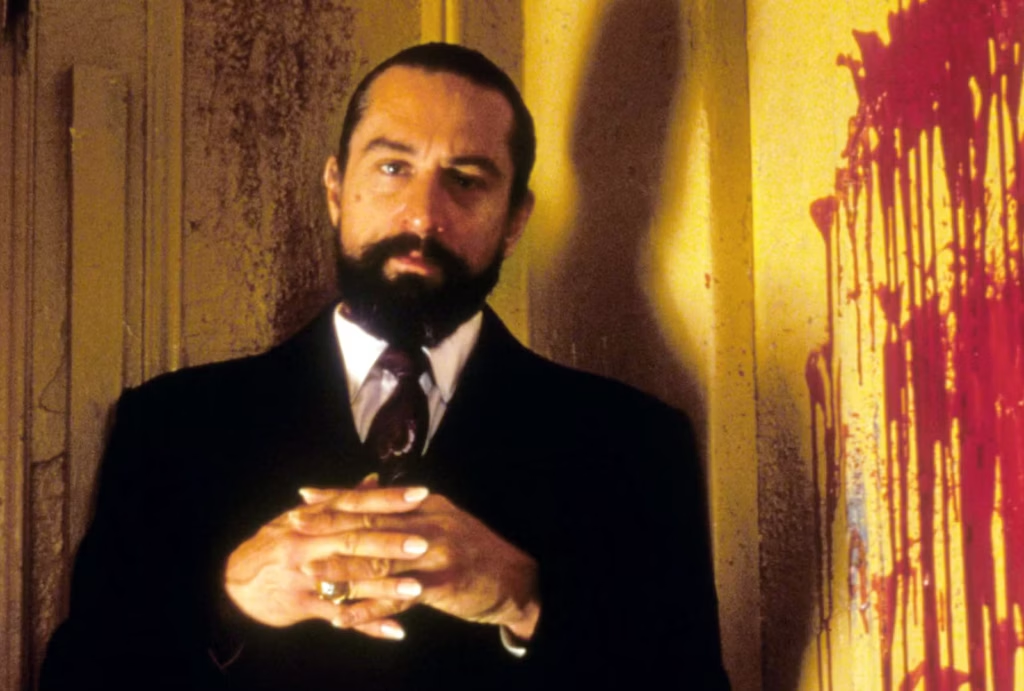
Here’s the thing everyone gets wrong about Lucifer: he’s not a monster. He was the most beautiful, most intelligent, most beloved angel in heaven. He had more wings than any other celestial being — twelve, reportedly, though apparently he only ever showed six because he had standards. He sat at the right hand of God and was, by all accounts, magnificent.
Then God created humans.
And God told Lucifer — the most exalted being in creation — to bow to them. To serve them. These soft, mortal, confused creatures made of dust and contradiction. And Lucifer looked at us, looked at God, and said no.
That’s the crime. Not evil. Not malice. Pride. The specific, searing pride of someone who was the best in the room for millions of years and then watched God put someone new at the head of the table. He didn’t fall because he was wicked. He fell because he couldn’t bear it.
Which is, and I say this with genuine unease, entirely understandable.
The terrifying part isn’t that he’s a monster from a story. It’s that his motivation is completely recognisable. You’ve felt that. Maybe not on a cosmic scale. But you’ve felt it.
He fell for nine days, according to Milton. Nine days of falling before he hit the lake of fire. When he landed, he didn’t despair. He looked around at the abyss and said: better to reign in hell than serve in heaven.
Then he started planning.
Appears in
Everything. Paradise Lost. The Exorcist. Supernatural. Constantine. The Sandman. Angel Heart. Your nightmares. The reason you double-checked your locks just now.
BEELZEBUB: LORD OF THE FLIES (AND THE WORLD’S MOST DIFFICULT SCHEDULING SYSTEM)
What he looks like
A giant fly. Or occasionally, when he’s feeling generous, a king in human form. The fly is somehow worse.
How to summon him
Here’s the thing. You can’t. Not directly. Beelzebub — the second most powerful entity in Hell, Grand Duke of the Infernal Court, the original Lord of the Flies — has a PA system. You must first petition Lucifer, or Astaroth, work down through seven demonic dukes, and only then, if they feel like putting you through, will Beelzebub consider your request. He’s not taking cold calls.
Once summoned, he manifests as flies. Actual, physical flies. If you notice them gathering near you with no apparent reason — on a cold day, in a room with no food, in a place they have no business being — he’s in the room. Which means every summer barbecue is now theologically concerning.
In 1634, a convent of Ursuline nuns in Loudun, France claimed to be possessed by Beelzebub among other demons. The exorcisms became a public spectacle — held twice a day, except Sundays, like a show — attended by thousands who came to watch the nuns convulse, speak in tongues, and use language that one account described as enough to “astonish the inmates of the lowest brothel in the country.” A priest named Grandier was blamed, convicted of sorcery, and burned alive. And at the moment of his execution? A monk reported that a large fly buzzed around his head — taken as a sign that Beelzebub had come to collect his soul.
The Lord of the Flies showed up as a fly. He has been the second most powerful entity in Hell since before recorded history, and he showed up to collect a soul as an insect. The audacity. The absolute audacity.
Don’t mistake the comedy for safety. Beelzebub is the demon most associated with possession — not temptation, not bargaining, but full takeover. He doesn’t want your agreement. He wants your body. He’s been doing this since ancient Philistia and he is significantly better at it than you are at defending yourself.
Appears in
Lord of the Flies (obviously). The Loudun Possessions. The Conjuring universe. Your kitchen at 2am when a single fly appears from nowhere in December.
THE SUCCUBUS: SHE’S NOT WHAT YOU THINK SHE IS
What she looks like
Whoever you find most attractive. That’s the mechanism. She reads you first.
How to summon her
You don’t have to. That’s the whole thing. She comes for you.
Let’s talk about what the succubus actually is, because pop culture has spent decades doing her a severe disservice. She is not the sexy demon from your favourite fantasy novel. She is not a titillating idea. She is an entity that visits people in their sleep, that they cannot see and cannot fight, and that leaves them hollow in ways they cannot explain in the morning.
The medieval name for what she does was “nocturnal disturbance.” The honest name for it is considerably worse.
She is the explanation for sleep paralysis — that specific, visceral horror that is genuinely one of the most terrifying experiences a human body can have. Waking suddenly unable to move. Certain there is a presence in the room. Something pressing on your chest. The sense of being watched by something that has been waiting. Medieval doctors did not call this a sleep disorder. They called it a visitation. And medically, formally, in actual written records, they attributed it to her.
She was the diagnosis.
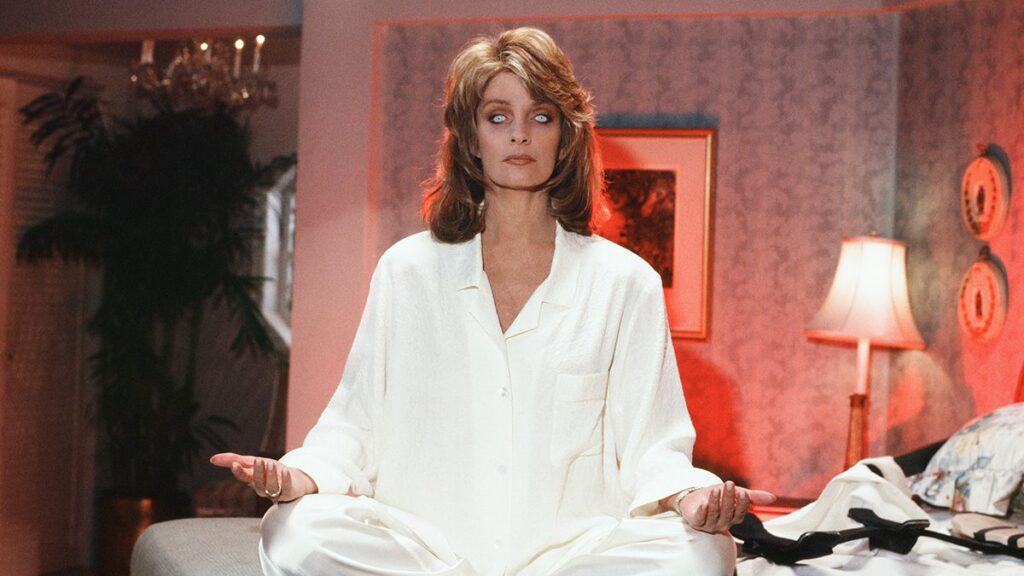
In 1994 on American daytime television, Dr. Marlena Evans of Days of Our Lives was possessed by the devil on Christmas Eve while her neighbours attended church and sang Silent Night. She levitated off the bed. She burned Christmas trees. She spoke in a voice that was not her own. NBC received letters from viewers who genuinely believed the actress Deidre Hall was actually possessed. The storyline ran for months. They brought it back in 2021 because the audience never fully recovered from it.
The succubus didn’t possess Marlena. But she is the same energy — the feminine demonic, the thing that gets inside you through the vectors of sleep and desire and vulnerability. The thing that finds the gap between waking and dreaming and slides through it.
The children born from her visits are called cambions. Half-demon offspring. Merlin, according to some traditions, was one. So was Alexander the Great. Which means two of history’s most consequential men may have been the result of a nocturnal visit to their fathers that those fathers could not explain and could not stop.
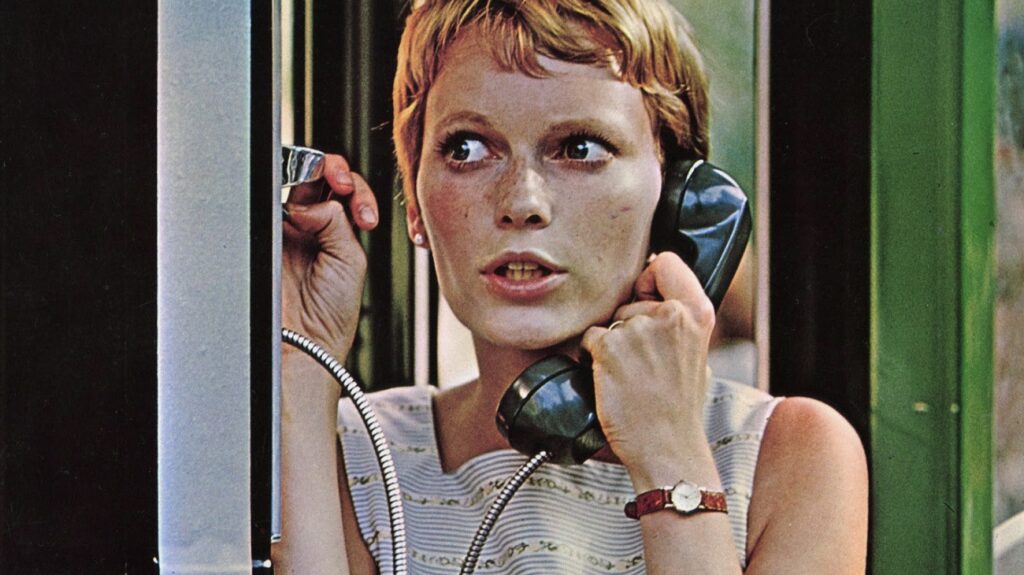
Rosemary didn’t summon anything either. She just woke up one morning and something was already inside her. The cambion, alive and growing. Hollywood has never made a more disturbing argument for why you should absolutely not move into a new apartment without checking your neighbours first.
Make of that what you will.
Also appears as
Jennifer’s Body (Megan Fox). Succubus in True Blood. Every “demon girlfriend” narrative that ends with someone hollow-eyed and exhausted and unable to explain why. The thing your friend’s ex gave off, now that you think about it.
AZAZEL: THE ORIGINAL SCAPEGOAT
What he looks like
A fallen angel of terrible beauty. In the Book of Enoch, a being of such power that his presence changes the air around him. In Supernatural — the only pop culture portrayal that actually captures his energy — a man with yellow eyes that make your stomach cold just looking at him. In the film Fallen, an entity without form that passes between human hosts through touch, invisible, unstoppable, moving through a crowd like a current.
How to summon him
Don’t. He’s not interested in what you want. He’s been waiting since before humans existed and his agenda has nothing to do with your request.
Here’s what Azazel actually did: he taught humans how to make weapons. And how to make women beautiful. War and vanity, simultaneously, as his gift to humanity. He taught us how to kill each other more efficiently and how to be consumed by our own appearances, and he delivered both lessons at the same time as if to say: here, have both. See how that goes.
It went predictably.
When God surveyed the result — the violence, the vanity, the comprehensive mess that humanity had made of itself — the angels needed someone to blame. And so Azazel became the scapegoat. Literally. The ritual described in Leviticus, where the community’s sins are loaded onto a goat that is then sent into the wilderness — that goat goes to Azazel. His name is in the text. We invented the entire concept of a scapegoat specifically to blame him for what we had already done to ourselves.
He taught us how to destroy each other. We used the lessons enthusiastically. Then we sent him a goat as punishment.
He has been angry about this for thousands of years. Understandably.
The yellow eyes in Supernatural are not an aesthetic choice. They are a reminder that this is something ancient looking out of a human face. Something that remembers a time before we existed and has been watching us make the same mistakes ever since.
Appears in
Supernatural (yellow-eyed demon, the big bad of the first two seasons). Fallen (1998, Denzel Washington, a demon that passes between bodies through touch — watch it). The Book of Enoch. Every war. Every mirror.
THE REST: BRIEFLY, BECAUSE SOME OF THEM DESERVE LESS OF YOUR ATTENTION THAN THEY’D LIKE
Andras
Angel’s body, owl’s head, rides a black wolf, carries a sword, will kill you AND your summoner. The Ars Goetia — an actual 17th century grimoire — prints a formal warning that you must stay inside the magic circle no matter how much he tempts you to leave, because if you step outside it he will kill you. People read this warning. They summoned him anyway. His specific power is sowing discord — not possession, not temptation. He just quietly destroys every relationship you have until you’re standing alone wondering how it went wrong so quickly. He never touched you. He just stood nearby.
Mephistopheles
Impeccably dressed, perfectly mannered, no visible reason to distrust him whatsoever. He doesn’t hide what he wants. Faust knew what he was signing. He signed it anyway. Mephistopheles is the only demon on this list whose victims understand exactly what they’re agreeing to and do it anyway. He doesn’t exploit weakness. He exploits ambition. The part of you that thinks you’ll be the exception. You won’t be the exception.
Asmodeus
Demon of lust, three heads (bull, ram, man breathing fire), has a rooster leg, killed seven consecutive men who tried to marry the same woman. Not because they wronged him. Not because she asked him to. He just didn’t want anyone else to have her. Was eventually defeated by the smell of burning fish liver. The most powerful demon of lust in existence, outwitted by fish organs. He has never recovered from this information. (Don’t let it fool you. He’s still extremely dangerous.)
Lilith
Adam’s first wife. Left him. Grew wings. Never looked back. Is currently doing fine.
Leviathan
Older than almost everything. In the Book of Job, God describes him as essentially uncontrollable, the one entity even He treats with caution. It doesn’t tempt you or possess you. It simply is. And occasionally, it notices you.
Pazuzu
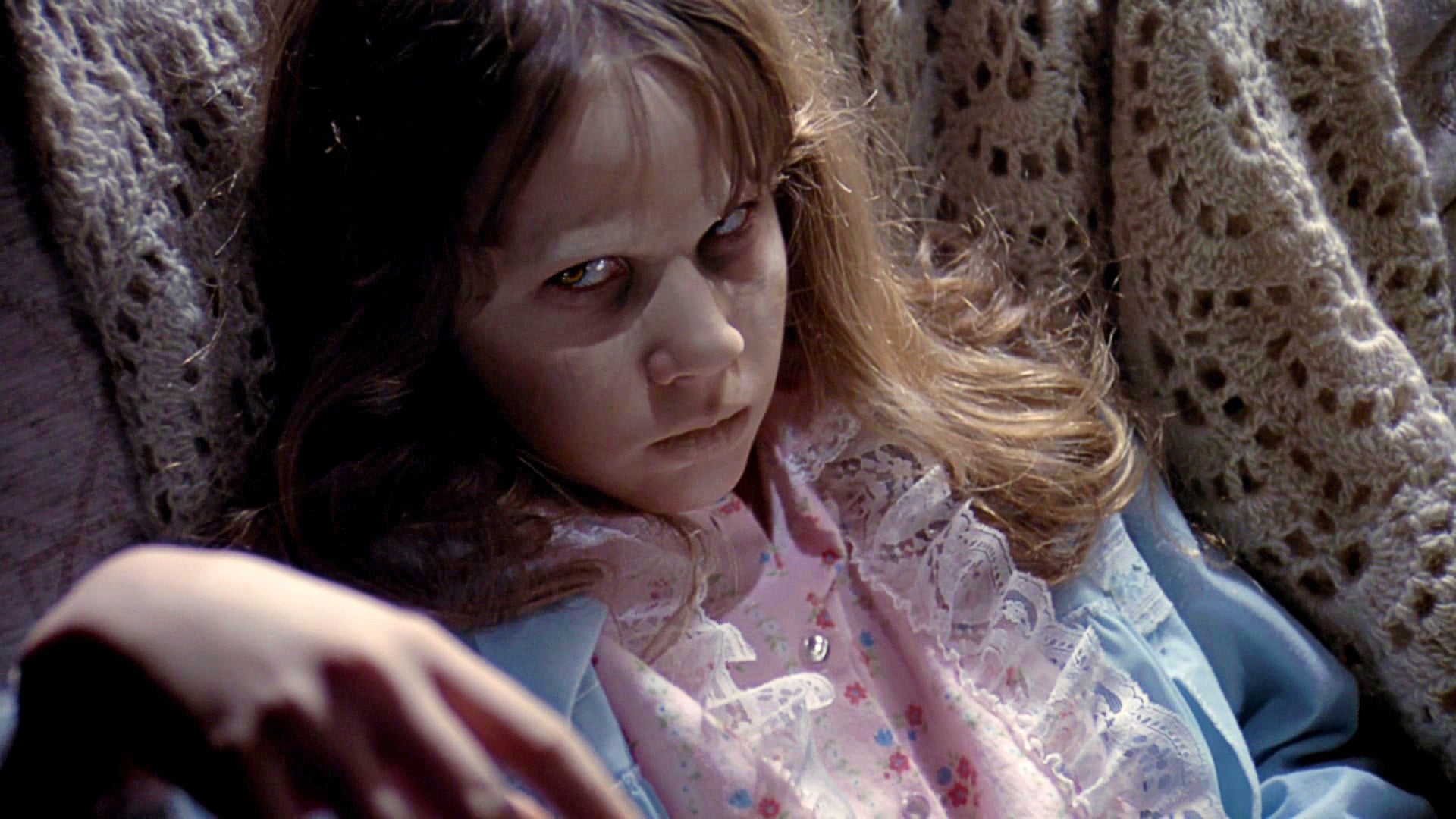
The demon from The Exorcist. The thing that possessed Regan. Also the thing that pregnant women in ancient Mesopotamia hung around their necks as a protective amulet. Both simultaneously true. He contains multitudes. None of them are safe.
PRETA: THE ONE WHO’S ALREADY HERE
And then there’s the Preta.
No appearance to describe. No summoning ritual. No pop culture moment. The Preta is a Buddhist hungry ghost — the form taken after death by a life consumed by greed, desire, and want that was never examined.
Distended stomach, vast as a mountain. Throat so narrow that food catches fire before it can be swallowed. Recognisably human. That’s the point.
You don’t summon a Preta. You become one. Not through a ritual, not through a bargain, not through a mistake. Through accumulation. Through decades of wanting without reflection. Through a life spent taking without considering, consuming without gratitude, reaching without ever arriving.
Buddhist texts suggest the world is full of them. Invisible, wandering, desperate, unable to be satisfied by anything. You have almost certainly walked through one. The cold spot in a room that has no reason to be cold. The sudden, sourceless hunger that has no specific object. The wanting that cannot be named.
Maybe that’s just hunger.
Maybe it isn’t.
Of every entity on this list — the fallen archangel, the Lord of the Flies, the thing that visits you in your sleep, the ancient scapegoat — the Preta is the only one you could become by accident.
Worth thinking about.
Chewie’s Take
I started writing this piece thinking it would be funny. And it is, in places — Asmodeus and the fish liver, Beelzebub and his PA system, the succubus being the medieval medical explanation for sleep paralysis. There’s real comedy in how specific and unhinged mythology gets when it’s trying to explain human darkness.
But then you get to Azazel. Then you get to Andras. Then you get to Preta. And the comedy curdles.
The thing that connects all of them — the actual through line if you’re paying attention — is that none of them are really external. They’re all versions of things we already have inside us. Pride. Obsession. Desire. Ambition. Greed. The demons didn’t bring those things to us. We made them. The mythology just gave them faces.
Sleep with the lights on.
Title image credit: Warner Bros.
Image credits: TriStar Pictures; NBC; Paramount Pictures
Chewie
Still scrolling? Then you're one of us.
Fortnightly recommendations for people whose "comfort watch" is a serial killer documentary. No spam, no filler, no cheerful nonsense.