ByChewie
Say Nothing: The Show That Made Me Feel Ignorant (And Grateful For It)
The Post Mortem
FX / Disney+ / Hulu | 9 episodes | Historical Drama / Thriller | 2024 | Peabody Award winner
A widowed mother of ten is dragged from her home in front of her children by people who believe — genuinely believe — they are fighting for something just. Nobody is punished. The body isn’t found for thirty years. The people who did it go on to become politicians. And in 2025, one of them is suing Disney over a TV show. This is the most addictive nine episodes of television I’ve watched in years and it made me feel ashamed of how little I knew.
Let me be honest with you about something.
Before I watched Say Nothing, I thought The Troubles were a rough patch. A period of sectarian violence, some bombs, some soldiers, some people behaving terribly on both sides, and then eventually they sorted it out and now there’s a peace process. You know. The thing that’s in the background of Irish history. The thing that explains certain things but doesn’t require deep examination. The thing I didn’t really need to know more about.
I was wrong. Comprehensively, embarrassingly wrong.
I watched Say Nothing as part of what I can only describe as an accidental Irish education — Derry Girls first, then this, then Woman in the Wall — and by the end of the three I understood something about Ireland that thirty years of passive awareness had never managed to teach me. Not the facts, exactly. The texture of it. What it felt like to live inside it. What it cost. What it still costs, because this is not history that has finished happening.
The Scene That Sets Everything
In December 1972, Jean McConville was taken from her Belfast home by a group of four women and eight men. Many were masked. At least one was carrying a gun. Her ten children — ranging in age from twenty to six — quickly realised that their mother’s abductors were not strangers. They were their neighbours.
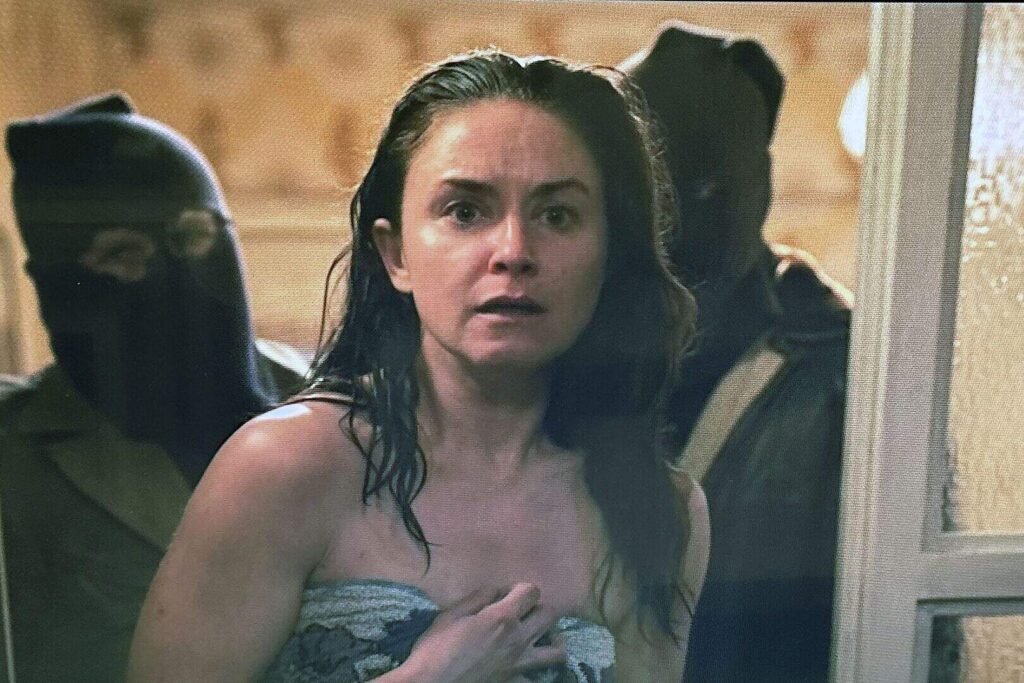
She was accused of being an informant for the British Army. In 2006, the police ombudsman for Northern Ireland released the results of an investigation that found no evidence she had ever been one.
She was killed on a false accusation.
Her body was not found for thirty years. In 2003, her remains were discovered on a beach in County Louth, in Ireland.
The show opens with her abduction and it keeps returning to it — the ripple of that night through the decades that followed — like pressing on a bruise to confirm it’s still there. It is the spine of everything that follows. Every scene of IRA idealism, every bomb, every hunger strike, every political calculation, is shadowed by those children standing in a hallway watching their mother be taken.
Her son Michael has not watched the series and says he does not intend to. “Using what happened to our mother for entertainment is sickening,” he said when it was announced. He’s right, and the show knows he’s right, and it makes it anyway — because some stories refuse to stay quiet no matter how much the people inside them would prefer it.
Say Nothing: What It Actually Is
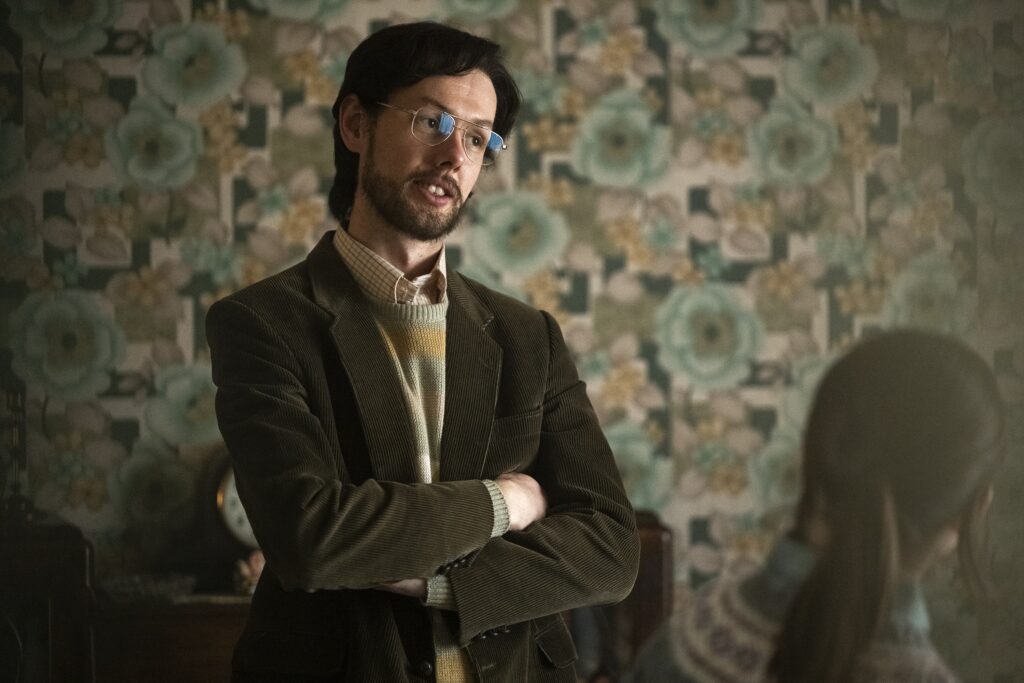
The series follows several historical figures through decades of The Troubles: Gerry Adams, a radical who became a politician who insists to this day he was never part of the IRA; Brendan Hughes, an IRA member nicknamed The Dark; and Dolours Price, one of the most complicated figures in the whole story.
As part of the Belfast Project at Boston College — an oral history project documenting the personal testimonies of former IRA members — Dolours Price recorded her account of The Troubles and her involvement in IRA operations. It was in these interviews that she admitted her role in the McConville case and spoke openly about the psychological toll of her actions and her growing disillusionment with the organisation she had given her life to.
The recordings were supposed to remain sealed until after the participants died. They didn’t. And that broken promise — who broke it, why, what it meant — is the other spine running through the series alongside Jean McConville.
This is a show about violence. But it is more precisely a show about what violence does to the people who commit it in the name of something they believe in. What it takes from them. What it leaves behind. What happens when the cause you gave everything to makes peace and shakes hands with the people you were fighting and calls it progress.
It is nine episodes. I watched it in two sittings. I Googled obsessively between them and after. I was shocked by how much of it was real.
Dolours Price: The Hero You Can’t Quite Love
I found Dolours Price genuinely difficult to connect with. I want to be honest about that because I think the difficulty is the point.
Lola Petticrew plays the younger Dolours, Maxine Peake the older — and Peake’s performance is perhaps the strongest in the series. Dolours was brilliant, she was committed, she believed in what she was doing with a fervour the show renders completely comprehensible even when what she’s doing is monstrous. She planted bombs. She drove Jean McConville to her death. She watched the cause she gave her life to become something she didn’t recognise. She ended up addicted, broken, and bitterly furious at the man she believed had sacrificed everyone else’s suffering for his own political career.
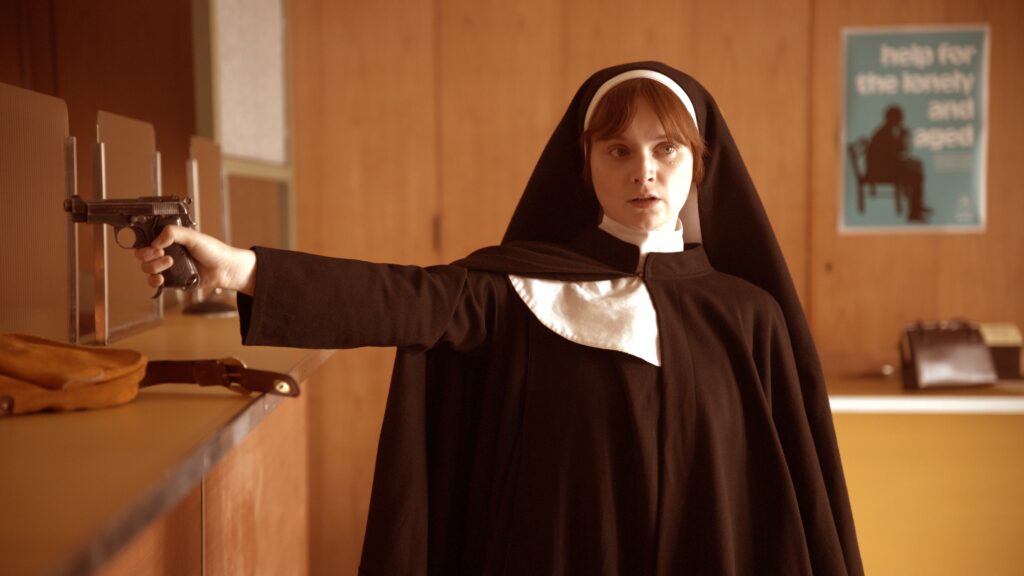
You can’t love her. But you can understand her. And understanding her — really understanding her, not just intellectually acknowledging her complexity — is more disturbing than loving her would have been.
That’s what the show does. It doesn’t ask you to sympathise. It asks you to understand. And once you understand, you can’t go back to the comfortable shorthand of crazy terrorists who blew things up.
They weren’t crazy. They were people. That’s worse.
Gerry Adams: The Man Who Was Never There
Gerry Adams insists to this day that he was never part of the IRA. At the end of every episode of Say Nothing, a disclaimer appears: “Gerry Adams has always denied being a member of the IRA or participating in any IRA-related violence.” At the end of episodes seven to nine, a further line adds: “He further denies any involvement in the abduction of Jean McConville.”
The show portrays him as a senior IRA commander who orchestrated operations, managed personnel, and then — when the political winds changed — remade himself as a peace process statesman while the people around him went to prison, lost their minds, or died.
The disclaimer runs at the end of every episode. Like a legal footnote at the bottom of a document that everyone reads and nobody quite believes.
What the show does with Adams is quietly, methodically devastating. It doesn’t call him a liar. It doesn’t need to. It just shows you the people around him — Dolours, Brendan Hughes, the others — and what happened to them. And then it shows you Adams at a press conference, well-dressed, carefully worded.
The contrast does the work.
His alibi for the night of Jean McConville’s abduction was that he was in prison at the time. When it was later revealed he had been released in June 1972 to fly to London for peace talks, he said: “I got confused about the dates.”
He got away with everything. That’s not a dramatic interpretation. That’s just what happened.
The Googling Problem
I Googled obsessively while watching this show. During episodes, between episodes, for several days after. I needed to know what was real and what was dramatised — and I was consistently, repeatedly shocked by the answer: most of it. Most of it was real.
The abduction of Jean McConville — real. The Boston College tapes — real. The hunger strikes — real. The body on the beach — real. In July 2025, Marian Price filed a claim against Disney in the Dublin High Court seeking damages and the removal of the scene depicting her shooting Jean McConville. The lawsuit is happening right now. About a murder from 1972. Because nothing about this is finished.
A note of honesty: the “now” storyline — following the McConville children as adults piecing together what happened to their mother — is based on real events but dramatised for the screen. The emotional truth is real. The specific scenes and dialogue are fictionalised. This is worth knowing going in, not because it diminishes the show, but because the actual story is complicated enough without needing embellishment.
My ignorance felt embarrassing in retrospect. Not just personally — though it was personally embarrassing — but in a broader sense. The Troubles didn’t happen in a distant country in a distant century. They happened in the British Isles. In living memory. People who were children during the worst of it are in their fifties now. The peace process is barely twenty-five years old. And I had filed it under a rough patch and moved on.
Say Nothing wouldn’t let me do that. That’s the most important thing it does.
The Accidental Irish Education
I watched this as part of an Irish trilogy and I meant it. If you’ve watched Say Nothing and haven’t watched the other two, you’re missing context that changes everything.
Derry Girls
A sitcom set during The Troubles that treats the bombs and the checkpoints and the soldiers as background noise. Because for the people who lived there, it was background noise. The comedy doesn’t diminish the darkness. It explains how people survived it. Watch it first.
Woman in the Wall
The Church’s violence, quieter and more sanctioned and in some ways more insidious than the IRA’s. A different crime, the same island, the same culture of silence. Watch it last.
Together with Say Nothing they form something no documentary quite manages. A picture of Ireland that is specific and human and terrible and funny and devastating all at once.
Chewie’s Take
Image credits: FX
Chewie
Still scrolling? Then you're one of us.
Fortnightly recommendations for people whose "comfort watch" is a serial killer documentary. No spam, no filler, no cheerful nonsense.